YUnique Marketing Insights
Whether you’re looking to grow, scale or exit your business, preparing for what’s next starts with strategic clarity. At YUnique Marketing, we’re on a mission to give ambitious SME business leaders the strategies to unlock their growth potential and build more valuable businesses.
Buying a Business Can Accelerate Growth. But Will It Create Value?
The deal creates the opportunity, but it’s what you do before and after it that creates the value.
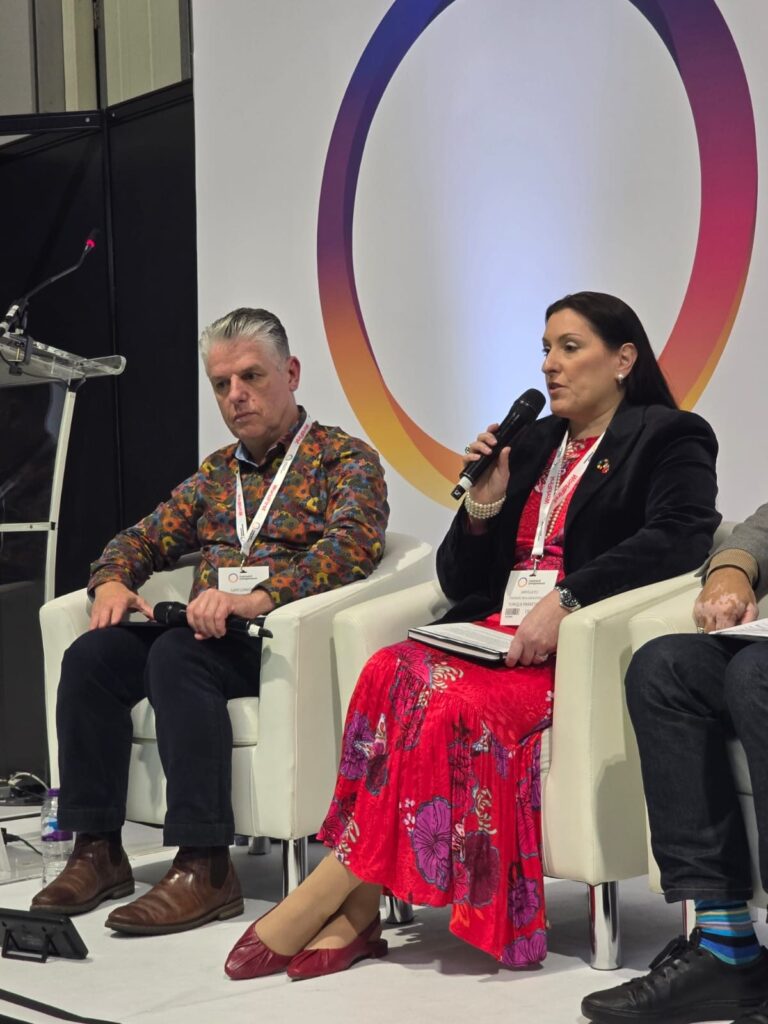
That was my central message when I joined the Can You Acquire Your Way to Faster Growth? panel at the Festival of Entrepreneurs 2026, alongside Guy Bartlett, James Oates and Ronak Kantaria, moderated by Gary Lennon.
The discussion brought together different perspectives on acquisition strategy, financial considerations, people, culture and integration.
My contribution was to bring The CMO Advantage™ to the growth logic before and after the deal.
Having spent more than 30 years in strategic marketing and business leadership, I’ve experienced mergers and acquisitions from several perspectives: working within businesses being acquired, supporting acquirers, helping integrate acquired businesses and seeing the consequences of acquisitions involving organisations we depended upon through partner channels.
One thing has become very clear to me.
Acquiring a business doesn’t automatically mean acquiring growth.
You may acquire revenue, customers, capabilities, intellectual property, talent, market access or a valuable brand. But whether those assets deliver the anticipated growth depends on what you understand, what you plan and what you do with them.
First, Be Clear About Why You’re Acquiring
There are many legitimate reasons to acquire another business.
You might want to enter a new market, expand your offering, access an established customer base, strengthen your capabilities, secure valuable intellectual property or accelerate growth that would take years to achieve organically.
Sometimes the objective is to consolidate a market or remove a competitor.
But different objectives require different acquisition and integration strategies.
If you’re buying access to new customers, how will you retain those relationships and introduce your wider offering?
If you’re acquiring specialist talent, what will encourage those people to stay?
If you’re buying a respected brand, how will you preserve and leverage the trust it has built?
And if you’re acquiring technology or intellectual property, do you understand the people, processes and expertise required to deliver its commercial value?
These questions should be considered before committing to the acquisition, not after completion.
Gary Lennon framed the discussion around an important distinction: whether an acquisition makes a business stronger, rather than simply bigger.
I agree.
Growth should be the outcome of a clear strategic rationale, not simply the expectation that combining two businesses will automatically create something more valuable.
Do You Really Understand What You’re Buying?
One of the most important lessons from my experience is that what a buyer believes it’s acquiring and what it actually acquires aren’t always the same.
I’ve seen this first-hand while supporting the integration of an acquired business into a much larger organisation.
The acquirer believed it was buying a software business. It had experience of integrating software businesses and approached the acquisition with an established integration playbook.
But the acquired business was much more than its technology.
Its offering also depended on specialist human expertise, including psychology, organisational design, HR and other professional services.
These weren’t peripheral activities. They were part of how the business delivered value to its customers.
Once that became clear, the original integration approach needed to be reconsidered.
It wasn’t simply a question of absorbing software into an existing portfolio. The acquirer needed to understand how to bring together different capabilities, professional disciplines, customer propositions, people and brands.
The lesson?
Don’t assume that what you’re acquiring fits neatly into a familiar category or an existing integration model.
Look beneath the headline description of the business.
Understand what customers actually buy, why they value it, how it is delivered and which assets and capabilities make that possible.
Because if you misunderstand where the value resides, you risk damaging it during integration.
Financial Due Diligence Is Essential. But What About Commercial Due Diligence?
Naturally, the financial case matters.
The panel brought considerable experience in assessing transactions, financing acquisitions and understanding the financial risks involved.
James Oates emphasised the importance of understanding the financial realities of a business, including cash flow rather than relying solely on headline earnings measures.
Guy Bartlett also drew on extensive acquisition experience to highlight the importance of people and cultural fit.
These are fundamental considerations. A business with attractive financial performance may still be a poor acquisition if the underlying assumptions, risks or compatibility don’t stand up to scrutiny.
But I would encourage buyers to go further.
Alongside financial and legal due diligence, ask whether the commercial case has been properly tested.
For example:
-
Customers: Who are they, why do they buy, how loyal are they and what might happen to those relationships following an acquisition?
-
Market position: How is the business perceived, what makes it competitive and is that advantage sustainable?
-
Brand: What recognition, reputation and customer preference has the business built, and how might ownership changes affect that value?
-
Capabilities and IP: What distinctive expertise, processes, technology or intellectual property are you acquiring, and who owns or delivers them?
-
Growth opportunities: Is there credible potential for cross-selling, entering new markets, expanding the offering or improving commercial performance?
-
Routes to market: How does the business generate demand and revenue, and what could be disrupted if its sales, marketing or partner arrangements change?
These considerations can fundamentally change the assumptions behind an acquisition.
The numbers tell you what a business has achieved. Commercial due diligence helps you understand why it has achieved it, whether that performance is sustainable and what it could become.
Don’t Overlook the Value of the Brand
I’ve seen first-hand how the value of an acquired brand can challenge an acquirer’s original assumptions.
I worked with a smaller business that had an excellent product and a strong brand. Following a strategic marketing review, we developed a more commercially focused go-to-market approach, rapidly building its pipeline and helping position it for a successful exit.
The business was subsequently acquired by a much larger, longer-established organisation.
But here’s where the story gets interesting.
The acquirer discovered that the brand it had purchased had stronger perceived brand value than its own, despite generating less revenue and having a shorter history in the market.
Ultimately, the larger organisation rebranded under the acquired company’s brand.
For me, this is a powerful illustration of why brand value should never be judged solely by turnover, business size or years of trading.
It also demonstrates why acquirers need to look beyond the obvious assets and financial performance of a business to understand the full commercial opportunity.
Sometimes the smaller business brings the bigger brand opportunity.
And recognising that value can fundamentally change how an acquirer approaches its growth strategy.
People and Culture Are Part of What You’re Acquiring
One of the strongest themes across the panel was the importance of people.
Guy Bartlett spoke about the significance of cultural fit and the difficulties that can arise when employees aren’t adequately prepared for a change in ownership.
Ronak Kantaria emphasised taking time to understand the seller and build relationships, rather than rushing immediately into the mechanics of a transaction.
An audience question also explored how buyers can assess the human side of a business before acquisition, when access to employees may understandably be limited.
These contributions reinforced something I’ve witnessed throughout my career.
Businesses aren’t simply collections of assets, contracts, products and financial results.
They’re made up of people whose knowledge, relationships, expertise and commitment often underpin their competitive advantage.
When ownership changes, uncertainty can quickly affect morale, confidence and retention.
And if key people leave, the buyer may lose precisely the expertise, customer relationships and organisational knowledge that made the business attractive in the first place.
I often describe this as the risk of losing valuable human intellectual capital.
Culture matters too.
Two businesses may appear commercially complementary but have very different values, leadership styles, ways of working or approaches to customers.
Those differences don’t necessarily make an acquisition unworkable. But they need to be understood and managed.
You can acquire a business on paper. You still have to earn the confidence and commitment of its people.
Integration Doesn’t Start on Completion Day
One of the biggest mistakes I see is treating integration as something to work out once the transaction has completed.
By then, some of the most important decisions may already have been made, expectations established and opportunities to prepare lost.
That’s not to suggest every detail must be fixed before completion.
As James Oates highlighted during the discussion, acquiring a business doesn’t necessarily mean immediately merging everything into one organisation. Sometimes the better approach is to allow an acquired business to operate independently while the buyer develops a deeper understanding of it.
I agree that integration shouldn’t be imposed indiscriminately.
But deciding how much to integrate, what to preserve and where to create connections should be part of the strategic thinking before the deal.
For me, that means considering the implications for:
-
Proposition and positioning: How will the businesses complement one another, and what will customers understand about the combined offering?
-
Brands: Which identities should be retained, developed, combined or retired?
-
Customers: How will existing relationships be protected, and how will any new opportunities be introduced?
-
People and leadership: What expertise must be retained, who needs to be involved and how will uncertainty be managed?
-
Sales and marketing: How will routes to market, lead generation, customer communications and commercial activity work together?
-
Growth delivery: Who will take responsibility for turning the acquisition rationale into measurable results?
Not everyone can be involved in confidential acquisition discussions before completion.
But a trusted group of relevant leaders and specialists can begin considering these questions early, while respecting the necessary confidentiality and ensuring the existing businesses continue to operate effectively.
The aim isn’t to create an unnecessarily complicated integration programme.
It’s to avoid discovering, after the deal, that the commercial growth plan depends on decisions nobody has properly considered.
The Real Opportunity Is What You Do With What You’ve Bought
An acquisition can create opportunities that weren’t available to either business independently.
A broader customer base may open up cross-selling opportunities.
Complementary capabilities may strengthen the proposition.
An established brand may provide access to a new market.
A new route to market may help a product reach customers it couldn’t previously access.
But none of these benefits is automatic.
Cross-selling requires a proposition customers genuinely value, supported by teams who understand how to sell and deliver it.
Combining brands requires clarity about positioning and customer perceptions.
Entering new markets requires understanding competition, customer needs, market-entry challenges and the capabilities needed to succeed.
And integrating teams requires leadership, communication and trust.
I’ve also seen how growth funding can create opportunities that a business isn’t immediately ready to exploit because the commercial implications of expansion haven’t been sufficiently explored.
The same principle applies to acquisitions.
Access to capital or ownership of additional assets doesn’t, by itself, create a successful growth strategy.
The commercial opportunity needs to be identified, developed, resourced and executed.
This is where I believe The CMO Advantage™ can make a meaningful contribution: connecting market opportunity, customer understanding, brand, competitive advantage and go-to-market strategy with the wider business objectives.
Not simply marketing the acquisition, but helping make the acquisition commercially successful.
Three Questions Every Buyer Should Ask
Whether you’re considering your first acquisition or have an established acquisition strategy, these are three questions I would encourage you to explore before committing to a deal.
1. What are we really buying?
Look beyond revenue, profit and the headline description of the business.
What customer relationships, brands, capabilities, intellectual property, talent, market access and competitive advantages are you acquiring?
Which of these are genuinely valuable, and how do they support your growth strategy?
2. What could go wrong?
Where might value be lost?
Consider customer attrition, the departure of key people, cultural incompatibility, conflicting brands or propositions, disrupted routes to market and unrealistic integration assumptions.
What are the dependencies, and what would happen if those assumptions proved wrong?
3. How are we going to make it work?
What needs to happen before and after completion to deliver the anticipated growth?
Which capabilities must be preserved, which opportunities should be developed, who needs to be involved and how will success be measured?
These questions won’t replace specialist financial, legal or transactional advice.
But they will help ensure the commercial growth opportunity receives the attention it deserves.
The Deal Creates the Opportunity. What You Do Next Creates the Value.
So, can you acquire your way to faster growth?
Yes. But acquisition is a route to growth, not a guarantee of it.
The most successful outcomes depend on much more than finding a suitable target, agreeing a price and completing a transaction.
They require clarity about why you’re acquiring, a deep understanding of what you’re buying and a credible plan for creating value.
That means bringing together financial, legal, operational, people and commercial perspectives, rather than treating them as separate conversations.
And it means recognising that some of the most important assets in an acquisition may not be immediately obvious from the financial statements.
My advice?
Understand what you’re buying. Anticipate what could go wrong. Plan how you’ll make it work.
Because the deal may create the opportunity, but it’s what you do before and after it that determines whether you unlock the growth potential.
TURN INSIGHT INTO ACTION
How Growth Ready Is Your Business?
Whether you’re looking to grow, scale or prepare for a future exit, are your business foundations ready to support your ambitions?
Take our complimentary Growth Readiness Scorecard and, in just 10 minutes, assess your business across five critical functions: People, Systems, Finance, Marketing and Sales.
Discover your strengths, potential gaps and opportunities for improvement, with a personalised report to inform your next ambitious business move.
DISCOVER YOUR GROWTH READINESS
GET GROWTH READY → UNLOCK YOUR GROWTH POTENTIAL