YUnique Marketing Insights
Whether you’re looking to grow, scale or exit your business, preparing for what’s next starts with strategic clarity. At YUnique Marketing, we’re on a mission to give ambitious SME business leaders the strategies to unlock their growth potential and build more valuable businesses.
Your Brand Is a Business Asset. Are You Treating It Like One?
Build the value. Protect the value. Leverage the value.
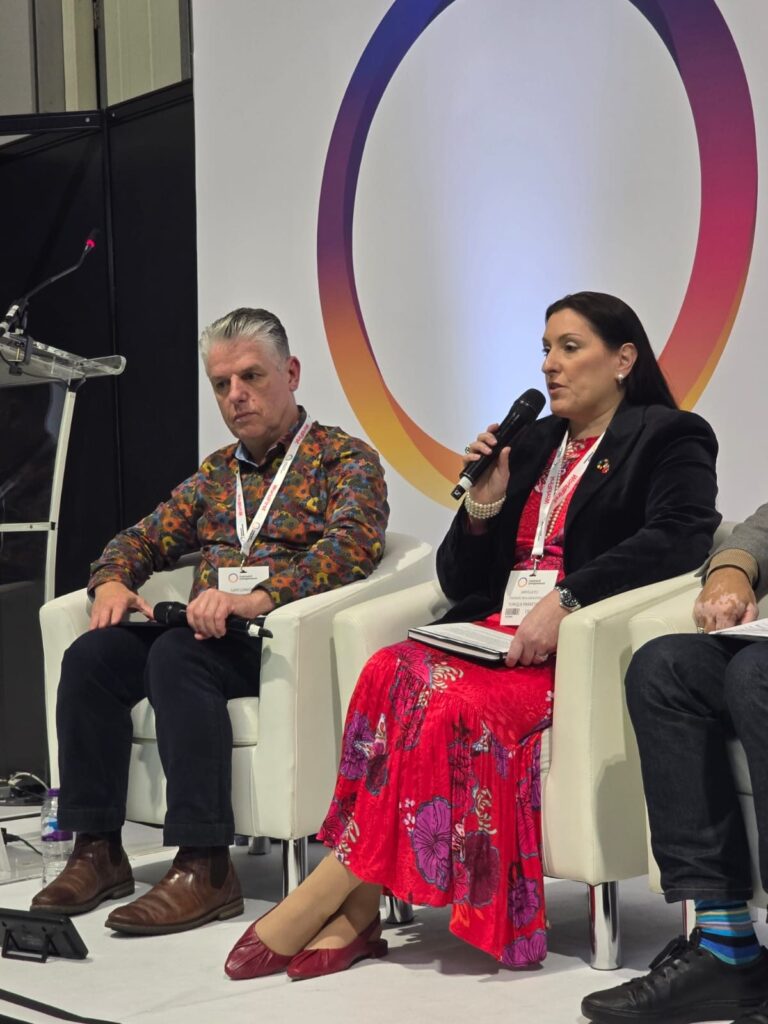
That was my central message when I joined a panel discussing Building Business IP Value at the Festival of Entrepreneurs 2026, alongside patent attorney Kate Butler of Sirius IP and trade mark attorney Rebecca Atkins of Abel & Imray, moderated by Andrew Walker.
We approached the subject from different professional perspectives, but our experiences reinforced a common message: intellectual property (IP) is not simply a legal or technical consideration. It is an important part of building, protecting and realising commercial value.
As a Consulting CMO and Growth Mentor, I bring The CMO Advantage™ to this conversation. Throughout my career, I’ve approached brand development as an investment in business value, not simply a marketing exercise.
And there’s an important distinction between having a brand, protecting a brand and building a brand that creates genuine commercial advantage.
Brand Value Goes Far Beyond a Logo
When business leaders think about their brand, they often start with their name, logo, visual identity and messaging.
These are important, but they’re only part of the picture.
A valuable brand is built on a clear understanding of what the business stands for, what makes it distinctive, the benefits it delivers and why people should choose it over alternatives.
That requires clarity around brand DNA, purpose, values, positioning and the experience the business consistently delivers.
And the audiences that matter extend beyond customers. Employees, prospective talent, business partners, investors and potential acquirers all form perceptions of a business that influence its commercial opportunities.
When these elements work together, a strong brand can help a business attract and retain customers, command stronger pricing, build loyalty, recruit talent, develop partnerships and create competitive advantage.
That’s commercial value, not simply marketing value.
But building that value is only half the challenge. You also need to understand how to protect it.
Protection Matters. But Protection Alone Doesn’t Create Value.
Kate and Rebecca brought valuable specialist perspectives to the discussion, highlighting the different forms of IP that businesses may need to consider.
These include patents protecting inventions, trade marks protecting distinctive brand identifiers, registered designs, copyright, confidential information and trade secrets.
Different assets require different approaches to protection. And a company name registration or available website domain doesn’t automatically mean a brand is legally available to use or adequately protected.
I regularly involve specialist IP attorneys early in brand development work, particularly before clients commit significant investment to a new name, identity or market launch.
My role isn’t to provide legal advice. It’s to ensure that the commercial strategy and appropriate legal expertise are connected, so that businesses make informed decisions before avoidable problems become expensive ones.
Equally, registering a trade mark doesn’t automatically create a valuable brand.
Legal protection helps defend an asset. Strategic brand development is what makes that asset commercially valuable.
Both matter.
When Growth Ambitions Expose Gaps in Protection
One experience from my Consulting CMO work illustrates why brand strategy, commercial growth and IP protection need to be joined up.
I worked with a UK fintech business whose previous funding had largely come from its leadership team and angel investors.
My strategic approach was to develop two complementary marketing workstreams in parallel: strengthening the business’s brand positioning, visibility and credibility to attract the attention of the wider investor community, while simultaneously building a lead generation engine to support customer acquisition and commercial growth.
The objective was to demonstrate both market opportunity and the business’s ability to capitalise on it.
This approach helped position the business for its next stage of growth, and it subsequently secured significant investment to support international expansion, including entry into the US market.
However, that next stage exposed an unexpected challenge.
The investment brought new growth ambitions, including expansion into the US market as part of the investor’s plans for the business.
It was at this point that a previously received cease-and-desist letter was disclosed to me. An established US business had challenged the company’s use of its brand name in a closely related market. The two businesses had subsequently agreed to operate within their respective territories, resolving the immediate issue.
That arrangement had worked while the business remained focused on its existing market. But with US expansion now part of the growth strategy, the previous agreement became a significant commercial obstacle.
Despite my earlier questioning and the categorical assurances I’d received about the business’s IP position, this territorial restriction hadn’t been brought into our strategic discussions.
The business now faced the prospect of entering a major new market without being able to use the brand it had invested in building.
A rebrand became necessary, with consequences extending well beyond the cost of a new identity.
Rebranding at that stage affects budgets, launch plans, marketing activity, lead generation, customer relationships, employee engagement and the momentum a business has worked hard to build.
It was a valuable learning experience for both of us.
For the business, it reinforced the importance of ensuring its brand and IP protection could support not just current operations but future growth ambitions.
For me, it reinforced the importance of interrogating assurances even more thoroughly: exploring what has actually been protected, in which territories, and whether that protection aligns with where the business wants to go.
Because being protected for where you are today isn’t necessarily the same as being protected for where you want to go tomorrow.
These Situations Are More Common Than You Might Think
What struck me during our panel discussion was how readily we could all share real-world examples of businesses encountering IP challenges.
Kate Butler described a business that had successfully developed and commercialised a product but hadn’t sufficiently considered international patent protection at the outset.
As the product became more successful, gaps in its protection left it exposed to copying. The business subsequently faced significant costs and effort tackling competing product listings on online marketplaces.
Rebecca Atkins also shared an example of a UK business whose established brand name created difficulties when it sought to enter the US market, ultimately resulting in a change of brand.
Different businesses. Different forms of IP. Remarkably similar commercial lessons.
And these situations aren’t necessarily the result of businesses ignoring IP altogether. Sometimes decisions are made with the best intentions, based on what the business needs today, without fully anticipating where growth might take it tomorrow.
The consequences can be significant: lost time, additional costs, disrupted expansion, weakened competitive advantage and opportunities that become harder to realise.
The earlier you connect brand strategy, commercial planning and IP protection, the more options you preserve for the future.
Protect Strategically, Not Indiscriminately
Of course, founders and CEOs must balance investment in protection with competing demands on their resources.
Andrew Walker raised this practical consideration during the discussion, questioning when businesses should commit expenditure to IP protection, particularly while still establishing commercial viability.
Rebecca made an important complementary point: businesses don’t necessarily need exhaustive searches and registrations across every potential market from day one.
A proportionate, staged approach can prioritise the territories most relevant to current operations and realistic growth plans, with specialist advice informing the level of protection required and the risks of delaying decisions.
I agree with that commercial approach.
The objective isn’t to spend indiscriminately. It’s to understand what matters, what the risks are, which decisions are time-sensitive and where investment in protection will support the business strategy.
That might mean checking brand availability before committing to a new identity, reviewing patent filing deadlines before disclosing an invention, or revisiting international protection ahead of expansion.
Protection should be planned as part of growth, not treated as an unexpected cost when something goes wrong.
Can You Demonstrate, Defend and Transfer the Value?
There’s another important dimension that becomes particularly relevant when businesses seek investment, pursue acquisitions or prepare for exit.
An audience member asked whether an email confirming the handover of a business and its IP from a former partner was sufficient evidence of ownership.
Rebecca emphasised the importance of formal written agreements that clearly establish who owns the relevant rights, rather than relying on informal correspondence that could create uncertainty or disputes later.
From my perspective, this connects directly to investment and exit readiness.
I’ve seen how important it is to understand what brand value exists within a business, how it’s protected, who owns it and whether it can be transferred to a future owner.
During investment or acquisition due diligence, questions about IP ownership, registration, contractual rights and commercial value can influence both confidence in the business and the terms of a potential deal.
And the assets worth considering aren’t limited to names and logos.
A business may have developed valuable proprietary models, processes, know-how, customer relationships, technology, content or other distinctive capabilities. Understanding what is legally protectable, what is commercially valuable and what is transferable requires different but complementary perspectives.
A strong brand may also hold value beyond its current revenue contribution, particularly where it offers market recognition, customer trust or opportunities for future growth.
It’s one thing to build something valuable. It’s another to demonstrate that value, defend it and ensure it can be leveraged by the business or a future owner.
Three Questions Every Founder and CEO Should Ask
Whether you’re building for growth, preparing to enter new markets, seeking investment or considering a future exit, these are three questions I regularly encourage business leaders to explore.
1. What makes your business and brand valuable to the people who matter?
Think beyond your products, services and visual identity. What drives customer preference, loyalty and advocacy? Why do employees, partners and investors choose to engage with your business?
2. What makes that value distinctive, credible and defensible?
What sets you apart? Can competitors easily replicate your proposition, capabilities or identity? Do you understand which assets can and should be protected, and whether that protection supports your future plans?
3. How are you protecting, demonstrating and leveraging that value?
Can you evidence the commercial contribution of your brand and other IP? Are ownership and rights clear? Are you using those assets effectively to strengthen competitive advantage, accelerate growth and build future business value?
These aren’t questions to ask only when launching a business, encountering a legal challenge or preparing to sell.
They’re questions worth revisiting as your business evolves.
Build the Value. Protect the Value. Leverage the Value.
The most valuable businesses don’t simply develop good products, build recognisable brands or register intellectual property.
They connect their commercial strategy, brand development, market positioning and appropriate IP protection to create assets that support sustainable growth.
That’s why I believe these conversations need to involve both commercial leaders and specialist advisers, each bringing their expertise to decisions that can have lasting implications.
A valuable brand doesn’t happen by accident.
Build it strategically. Protect it appropriately. Leverage it commercially.
Because the real opportunity isn’t simply to protect what your business is worth today. It’s to build and preserve the value it could create tomorrow.
TURN INSIGHT INTO ACTION
How Growth Ready Is Your Business?
Whether you’re looking to grow, scale or prepare for a future exit, are your business foundations ready to support your ambitions?
Take our complimentary Growth Readiness Scorecard and, in just 10 minutes, assess your business across five critical functions: People, Systems, Finance, Marketing and Sales.
Discover your strengths, potential gaps and opportunities for improvement, with a personalised report to inform your next ambitious business move.
DISCOVER YOUR GROWTH READINESS
GET GROWTH READY → UNLOCK YOUR GROWTH POTENTIAL